The client
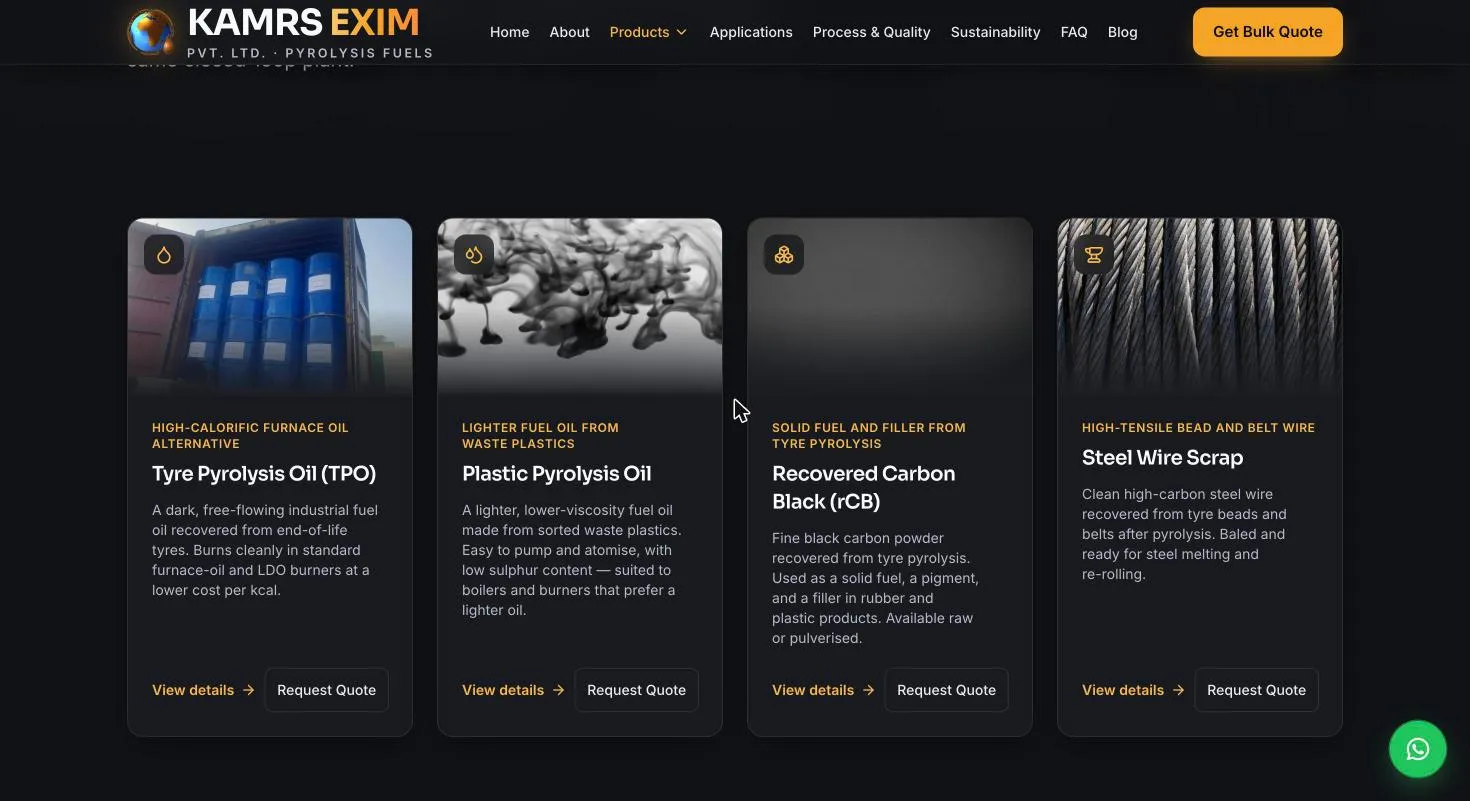
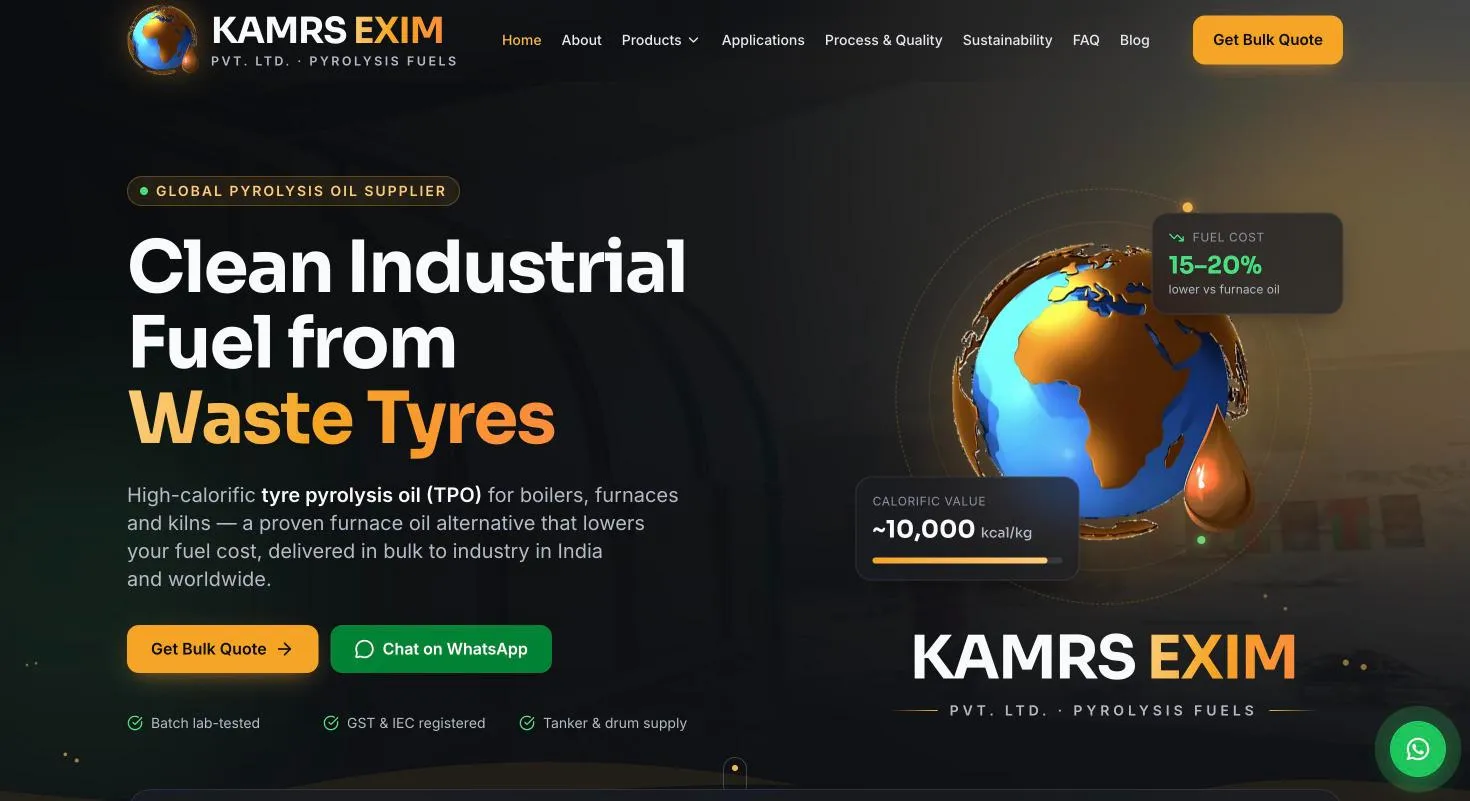
KAMRS EXIM supplies fuel oil recovered from waste tyres and plastics — tyre pyrolysis oil, plastic pyrolysis oil, recovered carbon black and steel wire — to industrial buyers who fire boilers, furnaces and kilns. Their customers are plant operators and procurement teams in sectors like steel re-rolling, cement, foundries, brick kilns and hot-mix asphalt, both in India and overseas.
That's a buyer who doesn't add fuel to a cart. They search for an alternative to furnace oil, compare calorific value and price per kcal, check that the supplier is properly registered, and then ask for a quote for a tanker or a batch of drums. The website's job is to be found for those searches, answer the technical questions honestly, and turn a serious visitor into a quote request.
What we built
A multi-page site structured around how an industrial buyer evaluates a fuel supplier, rather than a single brochure page:
- A dedicated page for each product, plus a technical specifications page and a pyrolysis oil vs furnace oil vs LDO comparison
- An applications page with a section for each industry served, so a cement or foundry buyer lands on content written for their use case
- Process & quality, sustainability and FAQ pages that answer the questions procurement teams ask before they call
- A bulk quote form that arrives pre-filled with the product the visitor was looking at, alongside phone, email and WhatsApp as first-class contact channels
- A blog for long-form, search-driven content on fuel economics and usage
Technical approach
The site is built with Astro and ships as pre-rendered static HTML. For a lead-generation site that lives or dies on search traffic, that's the right trade: every page is fully readable by search engines without running JavaScript, pages load quickly on the mobile connections a lot of site and plant staff use, and there's no application server to patch or keep running.
Search was designed in from the start rather than added at the end: a unique title and description per page, Organization and LocalBusiness structured data, an XML sitemap, and clean URLs that map to how buyers actually search — by product and by industry. The quote links carry the product through to the form, so the enquiry that reaches the sales team already says what the buyer wants.
Outcome
kamrs.in is live, with the full catalogue, application pages and quote workflow in place. It's the same approach we'd take for any B2B business whose customers research before they buy: structure the site around the buyer's questions, make every page fast and indexable, and make the next step — a quote request — impossible to miss. Visit kamrs.in.